
Scope / Limitations
This guide helps pick the right class of system. Final GPU model, memory, power and thermal configuration must be confirmed by the exact system revision and deployment environment.
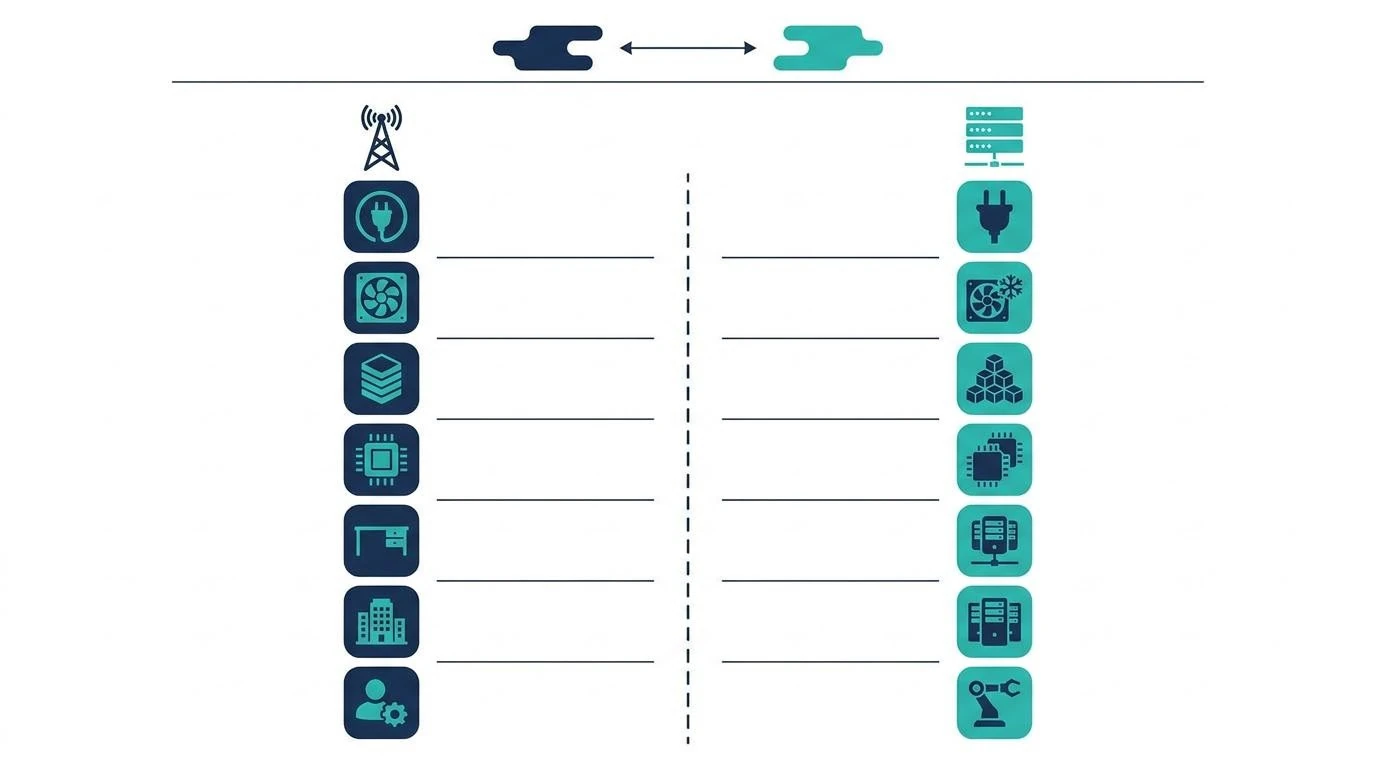
1) Workload first: inference, fine-tuning or training
- Inference at the edge: prioritize stability, I/O, and constrained power/space.
- Development and prototyping: prioritize interactive use, upgrade path and quiet office operation.
- Training/fine-tuning: prioritize GPU count, PCIe lanes, cooling, and datacenter-friendly design.
2) Quick decision table
| If you need... | Workstation is favored | GPU server is favored |
|---|---|---|
| Office / lab deployment | Lower operational friction, easier local access | Often too noisy/heavy unless designed for office |
| Single GPU / moderate expansion | Good fit, especially for development | Overkill unless you need server-grade features |
| Multiple GPUs / heavy PCIe | Limited by chassis, lanes and thermals | Designed for multi-GPU density and airflow |
| Remote operations & SLA | Depends on platform management | Usually better for datacenter operations |
3) Memory, storage and data path constraints
- Model size implies GPU memory needs; include headroom for batch size and KV cache.
- Data pipeline: SSD speed, network bandwidth, and where datasets live.
- Consider who maintains the system: IT team vs engineering team.
4) Output: a “selection brief”
Example
Use case: 70B inference + RAG · Environment: office · Power: single-phase · Target: quiet operation · GPU: single high-memory GPU · Storage: NVMe · Network: 10GbE optional