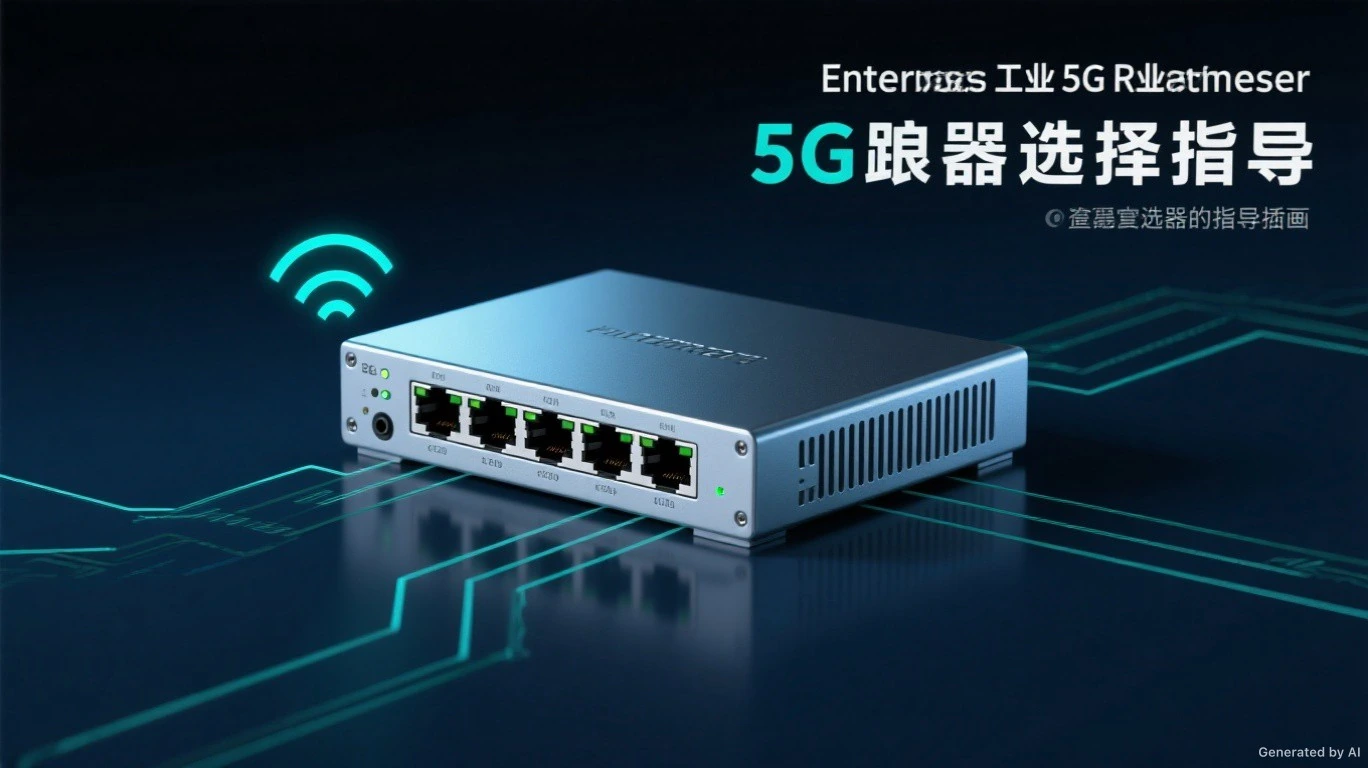
Scope / Limitations
This guide is a selection framework. Exact carrier band support, certifications, antenna performance, VPN throughput and environmental ratings must be confirmed by the exact model revision and project requirements.
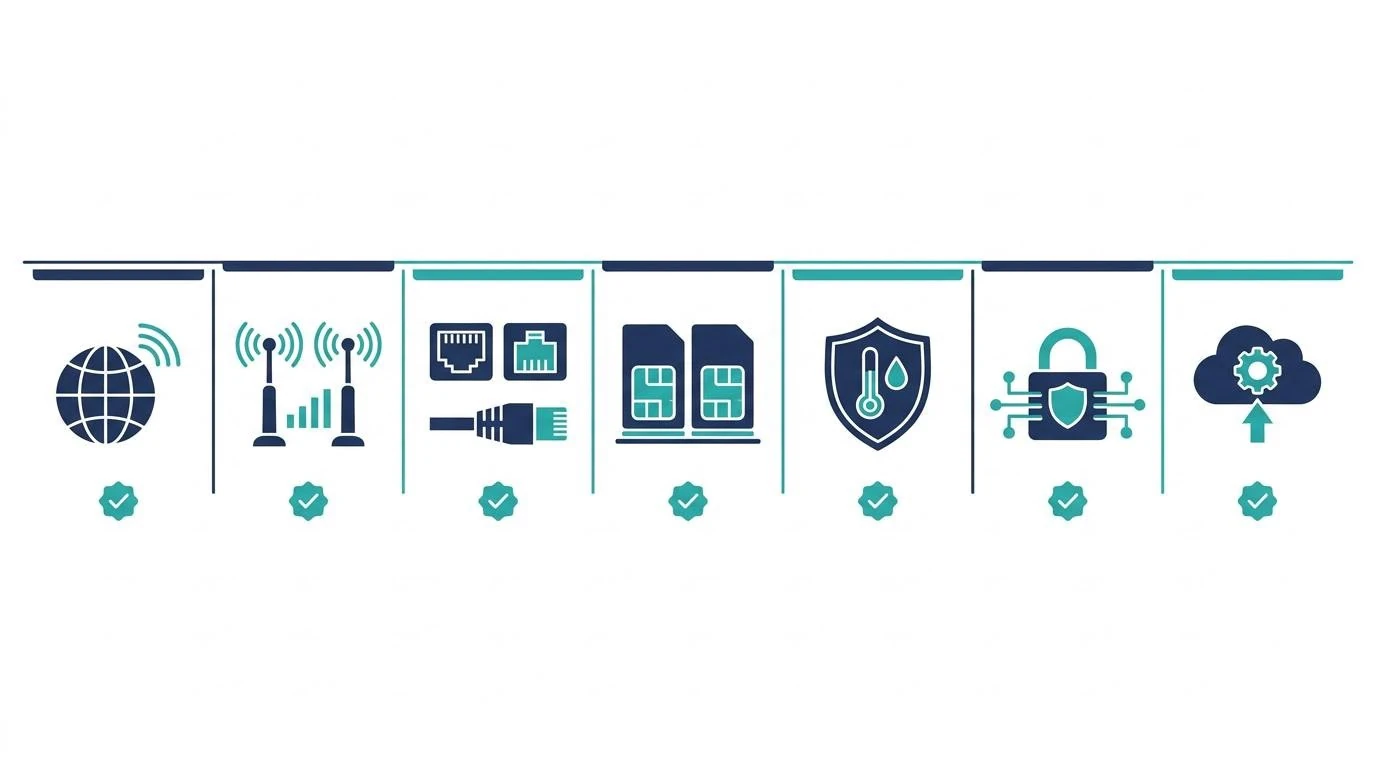
1) Start from the environment and installation
- Indoor vs. outdoor, enclosure/IP rating, temperature range and humidity constraints.
- Mounting: DIN rail / wall / pole mounting, vibration and cable routing.
- Power input: 12/24/48V, surge/ESD protection and power redundancy if required.
2) Cellular requirements (band, carrier and SIM)
“5G router” is not one spec. Selection starts with carrier and spectrum constraints.
| Decision | What to confirm | Why it matters |
|---|---|---|
| Carrier & bands | Sub-6 / LTE fallback bands required in target countries | Determines if the link works at all |
| SIM design | Single SIM vs dual SIM; failover policy; SIM form factor | Uptime and operational safety |
| Antenna | Connector type; MIMO requirements; outdoor antenna placement | Throughput and stability in real sites |
3) Wired interfaces: Ethernet ports, SFP, serial and I/O
- Count the devices: PLC/IPC/cameras/APs → required Ethernet ports.
- If fiber is needed: confirm SFP/SFP+ support and optical module compatibility.
- Industrial integration: RS232/RS485, DI/DO requirements, and protocol gateway needs.
4) Security and manageability
- VPN options required by your policy (e.g., IPsec/OpenVPN/WireGuard), plus expected throughput.
- Remote management: cloud controller vs local management, logging and alerting.
- Network segmentation: VLAN, firewall rules and routing needs.
5) Selection output: a short “requirements line”
When you finish, you should be able to produce a single line like this:
Example
Country: EU · Outdoor IP66 · Dual SIM failover · 2×GE + Wi‑Fi 6 · VPN (IPsec) · −30°C to +70°C · Pole mount